Knee problems in children and young people
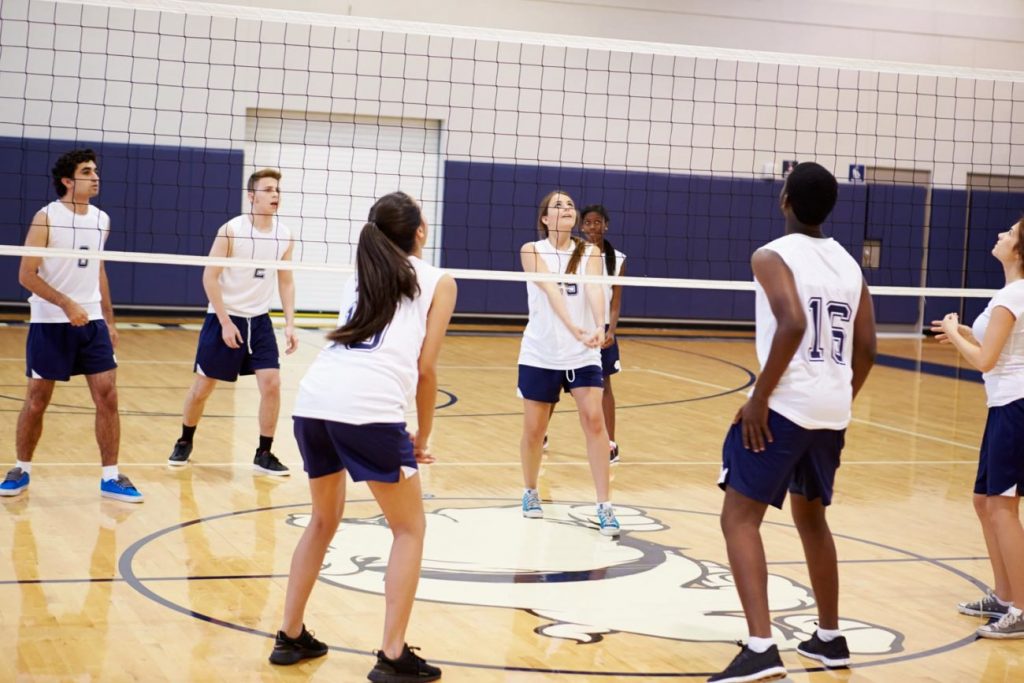
As children become more involved in extreme sports such as skiing and snowboarding and are generally more active at a younger age, Professor Adrian Wilson and his team are seeing increasing cases of ligament damage, particularly to the anterior cruciate ligament (ACL). As children’s bones and ligaments are not yet fully developed, they are at greater risk of damage.
With his colleague Mr Raghbir Khakha they have set up the Children’s Knee Clinic, which is a specialist unit within The Portland Hospital dedicated solely to the diagnosis and management of knee problems in children, with a specialist focus on ligament injuries in children and young people. They share a passion for addressing the current epidemic of knee ligament injuries being suffered by children.
The team also treats all other knee problems in children such as osteochondritis.
Ligament problems in children and young people
Damage to the anterior cruciate ligament (ACL) is the most frequently seen injury in children and young people and is accelerating rapidly year on year, for a variety of reasons.
The ACL is the largest ligament in the knee and controls the back and forth motion of the knee, along with the less commonly injured posterior cruciate ligament (PCL), which helps give stability.
If the ACL is torn or ruptured, the knee becomes unstable when it is twisted and can give way, as well as losing its full range of movement. As the knee gives way, the delicate structures inside it, as well as the joint surface and meniscal cartilages, may also be damaged.
Adrian has pioneered a number of new procedures for treating ACL injuries in children and, in some cases, it may now be possible to re-attach the torn ligament using keyhole surgery. Traditionally, ACL surgery meant a recovery time of up to a year, whereas these new procedures have reduced this to around four months. New techniques also minimise the risk of growth disturbance which is a major concern when operating on young children.
Ligament repair is usually easier to do in the first 6 – 8 weeks following an injury, although in some cases repairs have been carried out up to 10 years later.
It is widely recognised that up to 95% of ACL and PCL tears in young children are repairable. A neglected ACL or PCL injury results in altered biomechanics of the knee and an increased risk of secondary arthrosis in the long term.
Osteochondritis
This group of conditions, which causes pain and disability, affects the growing skeleton of a child or adolescent and the surfaces of the joints (cartilage) in the knee. The diseases interrupt the blood supply to a bone which results in bone death (necrosis) and later regrowth of the bone.
Who is most at risk of osteochondritis?
Children and teenagers who take part in sport are more likely to develop the condition and it’s also more common in boys.
What are the symptoms of osteochondritis?
Symptoms include pain, swelling, stiffness and/or weakness in the joint. There may also be a feeling of the joint ‘popping’ and, in some cases, locking.
How is osteochondritis diagnosed?
Adrian will discuss your child’s symptoms with you and carry out an examination of the knee to check for tenderness, stiffness, swelling and any difficulties with movement. In most cases, he will arrange for them to have an X-ray to confirm the diagnosis. The final diagnosis is made with an MRI scan.
How is it treated?
In most cases, resting and taking the weight off the knee for a period of time will settle things. Adrian may also advise that your child has a course of physiotherapy to strengthen the muscles and tendons around the joint. However, in some cases, he may advise that your child has surgery to fix the bone and cartilage fragment that have partially detached.
Types of osteochondritis include:
- Osgood-Schlatter disease
Pain and swelling in the bony lump that lies just below the kneecap can be caused by Osgood-Schlatter disease. - What causes Osgood-Schlatter disease?
Osgood-Schlatter disease is caused by a bone at the top of the shin bone becoming affected during a growth spurt. It’s more common if your child takes part in sports that include running and jumping or where there is repeated stress on the knees. - What are the symptoms of Osgood-Schlatter disease?
The most common symptom is the formation of a bony growth where the patella tendon joins the shin bone. - How is Osgood-Schlatter disease diagnosed?
Adrian will discuss your child’s symptoms with you and carry out an examination of the knee to check for tenderness, stiffness, swelling and any difficulties with movement. In most cases, he will arrange for them to have an X-ray to confirm the diagnosis. - How is Osgood-Schlatter disease treated?
In most cases, resting, along with taking painkillers (as prescribed by your doctor) is enough to relieve the symptoms and your child is likely to make a complete recovery by the time he or she stops growing. Surgery is only very rarely necessary. However, children with Osgood-Schlatter syndrome will still have a bony lump on the front of the shin bone, even after surgery. - Sinding-Larsen-Johansson syndrome
This painful condition often affects teenagers during growth spurts. - What causes Sinding-Larsen-Johansson syndrome?
It’s caused by repetitive strain on the patella tendon which causes the growth plate to become inflamed and painful. It’s more common in boys aged 10-15. It’s sometimes described as the childhood equivalent to jumper’s knee. - How is Sinding-Larsen-Johansson syndrome diagnosed?
Adrian will discuss your child’s symptoms with you and carry out an examination of the knee to check for tenderness, stiffness, swelling and any difficulties with movement. In most cases, he will arrange for them to have an X-ray to confirm the diagnosis. - How is Sinding-Larsen-Johansson syndrome treated?
In most cases, resting, along with taking painkillers (as prescribed by your doctor) is enough to relieve the symptoms and your child is likely to make a complete recovery by the time he or she stops growing. Surgery is only recommended in around 5% of cases.